Waikato River, Hamilton

Waikato River, Hamilton
Low Water Waikato River, Hamilton NZ

Monday, August 29, 2011

CAMERA BAG CHOICE REQUIRES CAREFUL CONSIDERATION

Post by Judy @ Gallery 21


When it comes to choosing the best camera bag for your gear, it is always important to remember that cameras and lenses are high precision pieces of equipment which require special storage for protection.  There are several matters which will determine what type of bag is required. 

If you have a point and shoot camera, these are usually compact in size without the need for separate lenses or flash units and will only require a small bag which may be supplied with the camera or can be purchased as an extra.

Professional photographers mainly use SLR cameras (usually digital but sometimes also film) which are generally more bulky, requiring lenses of varying sizes, separate flash units plus a myriad of accessories such as filters, digital cards or film, tripod etc.   Most professional photographers would have more than one camera body which would also need to be accommodated in the bag.  The type of work the professional photographer is doing and the distance from home base will also determine the type of bag required.

Tamrac Expedition 5 camera backpack
At Gallery 21 for example, we specialise in photographing the natural and built environment, so the majority of our work is outdoor requiring a sturdy, hard wearing bag.  As we are often in remote places, we also need to have all of the equipment with us (two camera bodies, three lenses, a separate flash unit plus filters, digital cards, charging units, spare batteries, tripod etc), to ensure that we are able to capture a wide range of images.  


The bag we have chosen is the Tamrac Expedition 5 model 5575 camera backpack which is not only rugged and hardwearing, but also practical because it has a handle for carrying it as a bag and a harness which allows it to be carried on the back leaving your hands free.  The bag, although not waterproof, has been built to withstand some inclement weather, with a big rain flap that you can tighten down over the zipper of the main compartment. Rubberized zippers on the front pouches help to keep those as dry as possible. 
Inside compartments of the Tamrac backpack


There are several padded compartments inside the bag with movable velcro inserts which can be configured into various shapes and sizes to suit your equipment.  Inside the lid there are several more zipped compartments which have either clear plastic or netting which allows visibility of the contents.  On the outside of the bag there is further zipped storage plus two smaller zipped pouches which we use for accessories.  A vented pocket on the bottom of the front of the bag is made to hold the feet of a tripod, while three straps can keep the tripod tied down.   


The type and amount of camera gear, the purpose for which it is going to be used and location should determine camera bag purchasing decisions.  Although not the largest camera bag on the market, the mid size Tamrac certainly suits our needs.

Wednesday, June 8, 2011

MAGNIFICENT NATURAL BRIDGE – WAITOMO NZ

Post by Judy@Gallery 21


"Photography is more than a medium for factual communication of ideas.
                           It  is  a creative art."                 Ansel Adams


A recent field trip to the remains of an ancient New Zealand cave was not only a photographic challenge and a real test of photography skills, but also a bit of a physical challenge too!


The Mangapohue Natural Bridge is located just 25 km west of Waitomo in New Zealand’s north island and once made up part of the entire cave system around the Waitomo area.  Today, all that remains of this ancient cave is the impressive 17 metre high limestone arch which spans the Mangapohue Stream.  Fortunately a walkway has now been built to allow visitors to climb up to a great vantage point with relative ease compared to the old stone track that used to be the only means of access.  Nevertheless, lugging heavy camera gear up this walkway still required a certain amount of stamina!


There are many other caves in the Waitomo area, the origins of which began over 30 million years’ ago with the creation of limestone at the bottom of the ocean.  Now these limestone formations, which include the world famous Waitomo Glowworm Caves, are one of New Zealand’s most famous natural wonders.


Photographically there was a wide range of light variations experienced from the dark interior of the rocky limestone arch to the lush green of the natural foliage, the flowing stream and the bright daylight beyond.  It was a real photographic challenge to ensure that all areas were correctly exposed and good results were accomplished by merging several shots at varying exposures.


Friday, April 15, 2011

OAMARU NZ - A WELL KEPT SECRET

 Post by Judy@Gallery 21

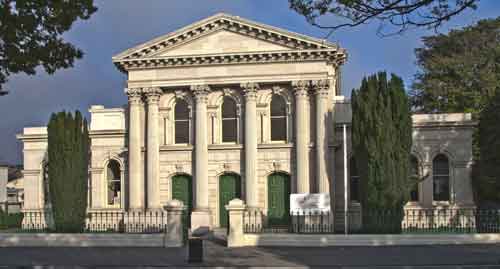
These photos were just some of the many taken as the result of a trip to Oamaru, located on the east coast of New Zealand’s South Island, which is one of the country’s best kept secrets.  It is a “must visit” for anyone interested in history and architecture. Not only is it a great town, but it also has one of the world’s most notable collections of buildings from the Victorian era still remaining.  

Australian Mutual building


Oamaru Courthouse
Architecture typical of the era

Historic precinct - Oamaru
Built during the prosperous times of the 1880s-1890s, each building has its own unique history and many have been preserved and maintained and are open to the public.  Although the buildings are scattered throughout the town, the historic precinct contains the largest collection of noteworthy buildings which now house a variety of businesses, artists and craftspeople.


Monday, February 28, 2011

PRACTICA LTL3 CAMERA - STRONG, SOLID, DURABLE

 Post by Judy@Gallery 21


This Practica LTL3 camera body has been part of our family since 1979 after it replaced an earlier model we had owned.  The lens is still the original Carl Zeiss Jena Tessar – a mighty piece of German engineering.


This solid manual SLR was manufactured by East German VEB Pentacon (Dresden) between 1975 and 1978.  Praktica’s in general are well-designed and built to last and we have heaps of transparencies and photos taken with this camera to prove it. 


This is the last of the LTL series and has a TTL metering system.  This camera's best feature is the super-strong shutter.  It's a vertical focal plane metal blade shutter with a very unique and sturdy wind stroke.  It feels like a mechanism that knows exactly what it's supposed to do and does it. 


Although this camera is 36 years’ old, it is still in excellent working condition and all we have to do is put a roll of 35 mm film in it and go and take photos.  It has been a good reliable friend which has travelled with us on many of our overseas trips recording lots of good memories in transparency and B&W negative film.


Friday, January 7, 2011

PRINT OUT YOUR IMPORTANT PHOTOS

Post by Judy@Gallery21


Backing up photographs with the sophisticated media available today ensures their preservation forever.  Right?  Wrong!

With the proliferation of digital cameras, taking large numbers of photographs has never been easier.  However, the downside of this is that many of these images only ever reside on computer hard drives, or on media such as CDs and DVDs or in the “virtual world” on internet sites and are never printed out.  What happens if that technology fails or becomes obsolete and those precious memories are no longer available to you? 

Remember the days of the 5.25in and 3.5in floppy disk?  These are just two examples of data storage which have now joined the ranks of obsolete media!  You need to check frequently (at least once a year is recommended by some commentators), to ensure you can still read the data and transfer it to new media as old ones become obsolete.

For permanent accessibility, printed copies are by far the best solution.   You don’t need to print out every single image, but you do need to select the important ones for printing and placing in albums.

In the past, photographs have recorded important family events and milestones, allowed future generations to trace the family tree or recorded historical events.  All of that could be in jeopardy for our future generations if we don’t pay enough attention to this crucial aspect of image making.   


Monday, November 29, 2010

HOT OFF THE PRESS - SPORTING ACTION

Post by Judy@Gallery21

To me, photography is the simultaneous recognition,
 in a fraction of a second, of the significance of an event.
  Henri Cartier-Bresson


Hamilton, New Zealand (aka“events city”) has hosted two popular sporting events this month. The annual “Round the Bridges” running and walking event and “The Bridge to Bridge Water Ski Classic” – the biggest event of its type in the country held on the Waikato River.  Gallery 21 photographers were there to capture some of the action.


(All images © Copyright Gallery 21 Photography)


Saturday, November 6, 2010

OPEN YOUR (PHOTOGRAPHIC) EYE TO YOUR NEIGHBOURHOOD

Posted by Judy@Gallery21

The important thing is not the camera but the eye.” – Alfred Eisenstaedt
(German-American photographer and photojournalist)

For enthusiastic amateur or professional photographers some of the best photo opportunities can be found in your own backyard or neighbourhood. 

Waikato River - within walking distance of  my home
Often we are in awe of photographs taken in exotic places, but most of us really don’t have to travel any further than our own areas to find some wonderful photo locations.  Because our neighbourhoods are so familiar to us, we tend to take things for granted and think of them as ordinary, often failing to see just how extraordinary they may be.  It’s just a matter of taking the time to stop and observe and developing that “photographer’s” eye i.e. the ability to really pay attention to details around you.      


Often you may need to visit a location several times before you get your shot.  A distinct advantage of being able to photograph in your own neighbourhood is that you are on the spot and can be there at a moment’s notice to catch the desired conditions for the shot envisaged. 

Californian Quaile snapped in my garden
Another advantage is that you’re likely to have explored the area where you live and have a good knowledge of some unusual or unique features that a casual visitor may be unaware of.  Make the most of these opportunities.  Experiment at different times of the day in different weather conditions, at different angles, to get the shots you want.

There are a myriad of subjects and the list is only limited by your imagination, your perception, your creativity. These attributes are just some of the things that can set you apart and provide those unique shots.  Some examples to get those creative juices flowing could include gardens, birds, pets, statues, sculptures, parks, street scenes, river, lake and beach scenes, events, buildings, architecture etc.    Write down some ideas of your own, do some research on the best shooting conditions and then go and capture those photographs.   Remember though, to be sensitive to people and if you are shooting close up, always ask their permission.